
Igor Makarevich (born 1943 in the village of Trialeti, Georgia; lives and works in Moscow)
Igor Makarevich (Игорь Глебович Макаревич)
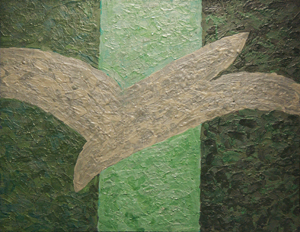
Seagull, 1992.
Encaustic on canvas, 28 x 35 inches. Kolodzei Art Foundation
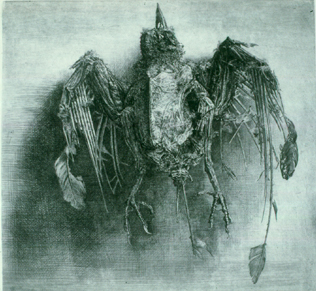
Still Life, 1973-74.
Etching, aquatint, 11-3/8 x 12 5/8 inches. Kolodzei Art Foundation
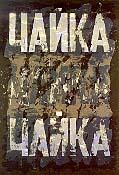
From the series The Seagull, 1991.
Сolor lithograph on paper. 28 7/10 × 20 9/10 in. Kolodzei Art Foundation
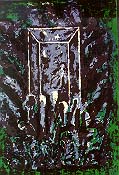
From the series The Seagull, 1991.
Сolor lithograph on paper. 28 7/10 × 20 9/10 in. Kolodzei Art Foundation
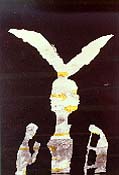
From the series The Seagull, 1991.
Сolor lithograph on paper. 28 7/10 × 20 9/10 in. Kolodzei Art Foundation
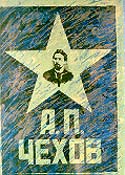
From the series The Seagull, 1991.
Сolor lithograph on paper. 28 7/10 × 20 9/10 in. Kolodzei Art Foundation
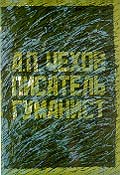
From the series The Seagull, 1991.
Сolor lithograph on paper. 28 7/10 × 20 9/10 in. Kolodzei Art Foundation
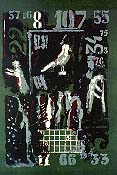
From the series The Seagull, 1991.
Сolor lithograph on paper. 28 7/10 × 20 9/10 in. Kolodzei Art Foundation
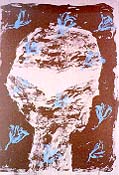
From the series The Seagull, 1991.
Сolor lithograph on paper. 28 7/10 × 20 9/10 in. Kolodzei Art Foundation
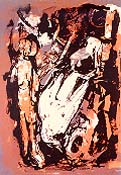
From the series The Seagull, 1991.
Сolor lithograph on paper. 28 7/10 × 20 9/10 in. Kolodzei Art Foundation
Born in 1943, Igor Makarevich is a key figure of Moscow Conceptualism and the contemporary art scene. His family relocated to Moscow in 1951, where he later studied at the Moscow Secondary Art School from 1955 to 1962. He continued his education at the Gerasimov Institute of Cinematography (VGIK) from 1962 to 1968, studying in the Department of Art under Vladimir Vasin (1918–2006) and Yuri Pimenov (1903–1977). The central theme of Makarevich's work is the exploration of the transience of existence through the mythologies of Soviet, Russian, and global culture. Much of his art is both physical and existential, closely tied to rethinking mortality and its pathologies, with a strong focus on self-observation and reflection, as evident in his reproductions of self-images.
Since 1990, Makarevich worked in close collaboration with his wife, artist and sculptor Elena Elagina (1949–2022). While both maintained their individual practices, they produced more than 50 projects as a duo. Together, they immersed themselves in the mythology and archaeology of the Soviet epoch, exploring the history of signs, symbols, and anonymous, mass-produced texts from the Soviet era. Acting as modest restorers of past art, they selected visual equivalents for these texts to revive their latent meanings. In their work, exotic implements from various localities, such as buck-rakes and snowshoes, are recontextualized as universal, primitive artifacts. The three words they most widely used to describe "the nature of things" are "wood, snow, and fish." In 2009, Makarevich and Elagina's collaborative depth was recognized internationally when their exhibition Common Cause was featured in the official selection of the 53rd Venice Biennale, curated by Daniel Birnbaum.